Sigfús Bjarnason and the beginning of Hekla
Hekla will turn 90 next year, and the Volkswagen dealership in Iceland will celebrate its 70th anniversary in a few days.
Recently, photos appeared of the demolition of the oldest buildings on the „Hekla Plot“ on Laugavegur. The decades-long history of the company at this location is soon coming to an end, and Hekla will be moving to a new location in Garðabær.
We have previously covered some of the influential figures in the automotive industry at the dawn of the automobile age, but now it's time for the beginning of Hekla and its founder, Sigfús Bjarna-son, with a brief overview of the start.
Sigfús Bergmann Bjarnason came from a poor environment in Núpsdalstunga, where he was born on May 4, 1913.
Sigfús came at a young age, fresh from his studies at Reykjaskóli in Hrútafjörður, first heading south to Reykjavík, not wealthy in worldly riches but all the more so in strength and diligence. He had so many things he wanted and intended to do.
Soon, he began studying both accounting and languages, but at the same time, he started working in fish processing for Kveldúlfur. With him was, among others, a young man from out of town, who would go on to found the wholesale company Hekla h.f. with him, and that was Magnús Víglundsson, later a wholesaler. These two men both had an unwavering faith in the future and their own industriousness, even though their capital was scarce.
Hekla founded in 1933
Sigfús and Magnús founded the wholesaler Hekla in 1933, and their first transaction was the import of fruit from Spain.
The partners ended their partnership in 1940, and from then on, the further development of Hekla began under the management of Sigfús.
Sigfús's next step was to establish Hekla Electrical Appliance Store, which was run for many years and was a major importer and retailer of electrical and household appliances.
In the following years, numerous business relationships were established, including with Kenwood and Caterpillar.
P. Stefansson makes his entrance
In 1952, Sigfús becomes the managing director and principal owner of P. Stefánsson h.f., thereby entering the business of selling cars and related services.
This company had been prominent in the automotive industry in Reykjavik for years, in both car repairs and car imports.
Land Rover comes to Iceland
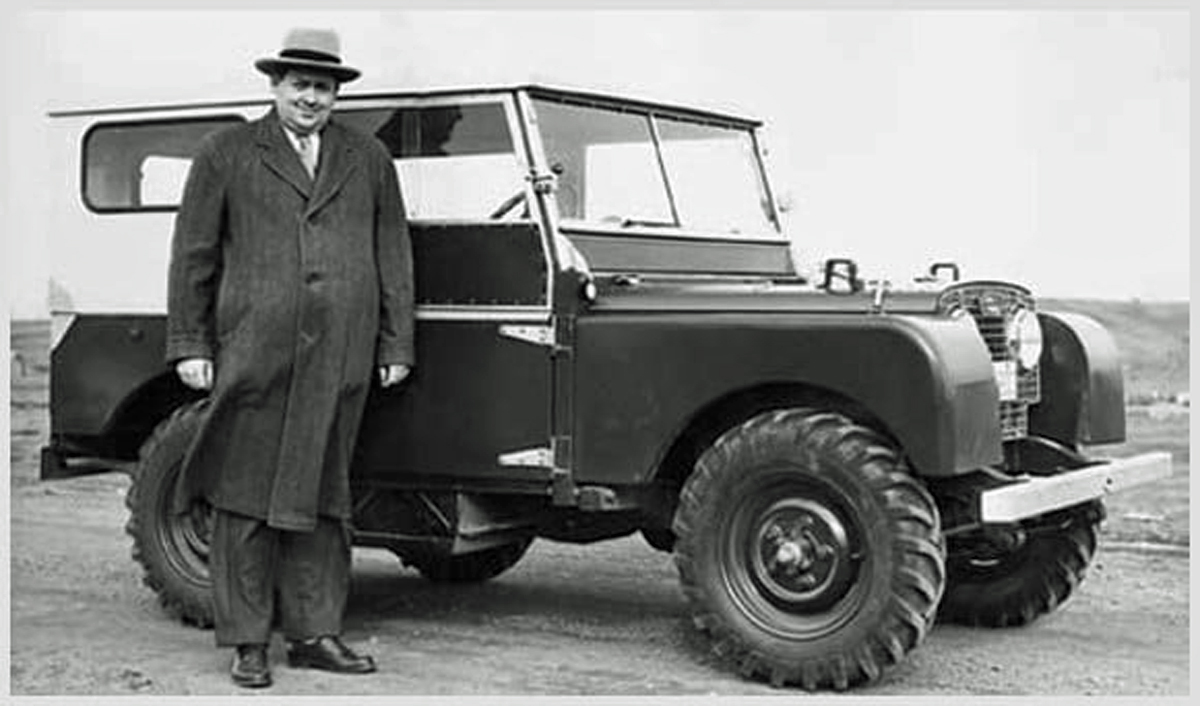
As early as 1951, when the Land Rover jeep became a hit in Europe, the Hekla wholesaler began importing it. Since then, many thousands of Land Rover vehicles have been imported, and several of them are still in full use.

At that time, a permit was required to import and purchase cars, and a news article in Morgunblaðið on Saturday, May 26, 1951, states:
Three thousand applied for 115 jeeps – the English ones were the most sought-after.
„The committee responsible for the allocation of the jeeps authorized by the Finance Council has long since completed its work. The Council authorized 115 vehicles, but 3,000 applications were received for them.
Of these 115 jeeps, just over 90 will be Land Rovers, which are manufactured in Britain.
Land Rover's local agent, the wholesaler Hekla, informed reporters of this yesterday. The first car has now arrived in the country, and it was shown to reporters yesterday.
Of the 115 jeeps that the Finance Council authorized for import, a total of about 60 go to farmers, including 60 Land Rovers. The others go to agricultural associations, doctors, midwives, and priests.
The Hekla department store hopes that all the cars will be here by the end of July. The factory believes it can clear the last of the cars for shipment around July 15th. Of course, whether their import can be completed by that time depends on shipping schedules, but every effort will be made.
The Land Rover will be imported with a canopy and will then cost about 27,500 kr., but in addition, the car has a special hitch for various agricultural machinery, as well as a spare tire and seating for two next to the driver. The factory produces special housings made of an aluminum alloy, but the Finance Council did not see fit to grant a permit for these housings. — However, it will be possible to import them for boat currency, which will cost about 3,700 krónur.
It has been a year and a half since the first Land Rover was brought to this country. — agents have been working hard to introduce the car to farmers and agricultural societies. Some changes have, of course, been made to it since then; for example, the front-wheel drive is no longer directly connected to the engine as it was in the first cars, but in all its main features, it remains the same. Experience has, of course, made various demands for improvement, as might be expected.“.
This is an excerpt from a news article in Morgunblaðið on May 26, 1951.

The Land Rover was especially popular in rural areas, where it was used for a variety of transport tasks. For example, some farmers would name the vehicles based on how many sheep could be loaded into the rear cargo area.
Hekla begins importing Volkswagen
Following the end of the World War, car imports in this country were greatly disrupted; some models disappeared and new ones took their place.
Among the new arrivals was the Volkswagen „Beetle“.
Due to other business relations with Germany, Sigurður Bjarni Sigurðsson, CEO of Hekla, and Árni Gestsson, assistant managing director, closely monitored what Volkswagen was doing, and subsequently, Árni is said to have contacted VW and sought to obtain the dealership for Iceland.
This was successful, and in December 1952, a dealership agreement was signed between Hekla and VW. In a few days, it will be the 70th „anniversary“ of VW's dealership in Iceland, as the first cars were delivered to buyers the following year.

Many stories could be told from these early years of Volkswagen in Iceland, because I had the opportunity to work for a time with Finnbogi Eyjólfsson, who began his career as a mechanic at Sigfús, later became a shop foreman, and then a press officer for Hekla, and he told many good stories from those years.
Sigfús Bjarnason passed away in 1967 at the prime of his life, at only 54 years old, but his sons, Ingimundur, Sverrir, and Sigfús Jr., took over and ran the company with great success for many years.
Ingimundur moved on to other ventures, becoming an ambassador among other things, but Sverrir and Sigfús continued until they sold the company in 2002.
Memorable man
Sigfús Bjarnason was a man who everyone noticed wherever he went. I remember Sigfús Bjarnason well, and I met him quite often when I was a boy. My maternal grandfather, Árni G. Eylands, was good friends with Sigfús and, not least, with Árni Getsson, the assistant manager of Hekla, because of the import of agricultural equipment from Norway.
I remember being startled when I met Sigfús for the first time, in the fall of 1955. Grandpa and I had arrived at Sigfús's office and were waiting for him, when suddenly I heard a voice behind me: "What's your name, young man?" And the voice startled me!
But it quickly became clear that he was a really nice guy, and he and Grandpa Sigfús were soon deep in conversation about farm equipment, and Sigfús was considering whether he should get the latest Bröyt loader, which Grandpa and I had looked at in Norway over the summer, but he was thinking of using it on his farm north of Þingeyrar. And there were a few more visits to Sigfús, including one time to Þingeyrar on the way to Hólar in Hjaltadal one year.
But events unfolded so that Árni Getsson left Hekla and founded his own company, Glóbus, and the agricultural equipment moved with him, so the trips to Sigfúsar came to an end.
„Those who fish, catch fish.“
Sigfús Bjarnason always knew well that you had to work hard to succeed, and the saying „those who fish, reap“ was dear to him, so much so that when I worked for the company around the turn of the millennium, you could see carved planks with this saying on them on the wall.
(Sources: obituary for Sigfús Bjarnason, newspaper articles, and more)
Compiled by Johannes Reykdal. First published on Bílablogg.is